
How Emotionally Focused Therapy Can Make Gay Marriages More Successful

Emotionally Focused Therapy is one of the most effective therapies for relationship and marriage counselling, especially when it comes to making gay marriages more successful.
In case you’re not familiar with the work of Dr Sue Johnson, she’s a clinical psychologist who developed Emotionally Focused Therapy (EFT), a scientific and evidence based therapy that’s revolutionized couples counselling – including making gay marriages more successful.
You can find the full rundown on EFT here but to give you the “CliffsNotes” version, Johnson discovered through hefty research that, “love relationships are emotional bonds – they’re all about the innate need for safe, emotional connection” (Johnson, S. 2008).
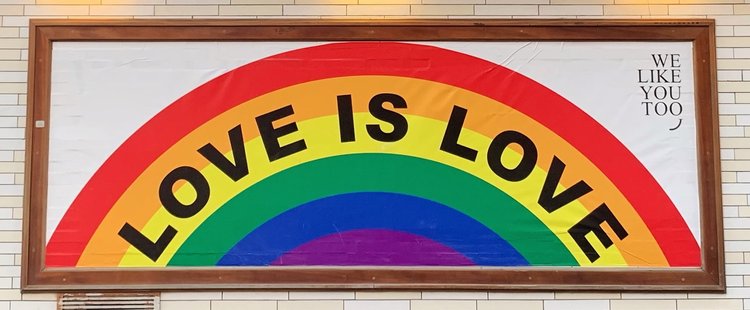
With that in mind, it’s safe to say that creating and sustaining emotional intimacy is what all couples want – regardless of their gender orientation or sexuality – because as humans, we all share this wired-in need for connection. (McNeil, D. 2021).
I work with a lot of LGBTQ couples and in my experience, I’ve found the pillars to making a marriage or relationship work for both hetero and same gender attracted couples are very similar.
Research has also shown that both same-sex and hetero couples want better communication, to learn how to navigate personal differences, express unmet needs and feel supported by their partner (Riggle et al., 2016).
Internalized Homophobia
One of the first stages of EFT is noticing the ‘negative cycle’ of interacting between couples that hijacks their relationship. While we explore these patterns, communication breakdown and how couples get stuck, we also look at where it might stem from.
Because of the way society has historically treated same gender attracted folks, this can lead to them internalizing the homophobia they’ve experienced externally (McNeil, D, 2021). They may unknowingly absorb some of the messaging, beliefs and discrimination they’ve suffered at the hands of random individuals or institutions, contributing to a negative sense of self or identity.

The way we view ourselves impacts the way we behave in our relationships. Internalized homophobia and shame can manifest in subtle ways – perhaps holding beliefs like, “I don’t deserve to be happy in a relationship”, “I’m in love with you, but I shouldn’t be because the same sex isn’t supposed to be attracted to one another” or “I’m basically unloveable so my partner can’t really love me” (O’Loughlin, K. 2022).
This can lead to sabotaging the relationship without you or your partner even realising it.
By using the EFT framework, it helps us uncover how your challenges as a couple can stem from your unique challenges as individuals. It also provides news ways of listening and remaining attentive to each other’s emotional experience – even when conflict or disagreements arise.
Lack of successful, same gender relationship role models
For many of my same gender attracted clients, they unfortunately didn’t grow up with a ‘template’ or role model for what a successful same gender attracted couple looks like. Not to mention there wasn’t really any representation of this in the media, TV or pop culture either.
Growing up without a positive ‘template’ can affect a teenagers’ or adults’ ability to accept themselves. This issue is also compounded for those who discovered early on that they’re sexuality wasn’t socially accepted or endorsed.
For many same gender attracted people, they’ve had to hide who they are out of fear of being bullied, traumatized or rejected by society or family. This can have an effect on self acceptance and their capacity to commit to a partner once they move into adulthood and start to form intimate relationships (O’Loughlin, K. 2022).
Even a difficult coming out process can affect the attachment and bond an individual experiences in their relationships.
EFT helps address this by diving into your family of origin, discussing childhood and how the behaviours you learnt then (or the social norms you were influenced by) may be affecting the way you interact with your partner now. EFT can also help you understand yourself and your partner better, which leads to more positive interactions, security, connection and love within the relationship.
Difficulty in Being Vulnerable
There’s an inherent vulnerability in being gay or in a sexual minority because of the risk of being negatively targeted (O’Loughlin, K. 2022).
To combat this, many same gender attracted folks put necessary measures in place to protect themselves, or have ‘walls up’ to avoid being vulnerable.

While this is totally understandable, this often carries over into same gender attracted relationships and adds a layer of difficulty when it comes to being vulnerable with emotions.
EFT can help same gender attracted couples to reclaim aspects of themselves that have been socially or culturally disconnected, especially the need for a safe and secure attachment bond (O’Loughlin, K. 2022).
EFT also creates a safe space for couples to explore their deeper needs and desires within their relationship.
With a qualified therapist guiding you to share honestly with your partner, you’ll learn how to listen and hear each other in a new way. When you feel you’re being heard, you automatically drop your defenses, open yourselves up to each other and start to ask for what you need more directly.
Besides learning how to effectively de-escalate conflicts and smoothly handle arguments, EFT helps strengthen your relationship foundation
You’ll develop new ways of clearly communicating, reaching out, and being supportive and truthful, so you can meet each other’s needs and intensify your bond in the process.
EFT is here to help you and your partner thrive, ultimately making your marriage or partnership more successful.
Still curious how EFT can make gay marriages more successful? Contact me if you have further questions or you can learn more about my approach to couples counselling here.
References:
McNeil, D. “Finding the Right Approach to Therapy with Same Sex Partners” TGI, The Gottman Institute (2021)
https://www.gottman.com/blog/finding-the-right-approach-to-therapy-with-same-sex-partners/ 3-5
Johnson, S. “Hold Me Tight” Hachette Book Group, Little Brown Spark (2008) Updated Edition (2014)
O’Loughlin, K. “EFT with Intimate Relationship Between Men” MCEFT (2022)
https://www.melbourneeft.com/product/dr-kieran-event-video-bundle/
Riggle, E. D. B., Rothblum, E. D., Rostosky, S. S., Clark, J. B., & Balsa
Zuccarini, D., Karos, L. :Emotionally focused therapy for gay and lesbian couples: Strong Identities, strong bonds” (2011) In J. Furrow, B. Bradley & S. Johnson, (Eds), The Emotionally Focused Casebook: New directions in treating couples, pp.317-342. New York, NY: Routledge